
Passing Inspection
That building is still there, more than 50 years later, sitting at the south end of the football field at my alma mater, Delta State University. The athletic fieldhouse I helped build when I was an undergraduate looks considerably different than it did then. It’s been enlarged and modernized, but the original main parts of it are still there. And I suspect it's still hard to heat and cool. There’s a reason for that. And I may be the only one left who knows it.
Gena and I were still newlyweds in May of 1973 when we moved to Cleveland, Mississippi, and I enrolled at DSU. She took a full-time job downtown with an insurance agent and I found part-time work with a construction company on campus. Together we were paying for my schooling and managing to put food on the table.
When I hired on, the construction company, a large firm out of Jackson, was in the early stages of erecting the new student union building. My work wasn’t very glamorous—I was just a common laborer—but the job was conveniently right there on campus, within walking distance from where we lived. I was digging and spreading, sweeping and toting, loading and unloading, doing all the little things needed to assist the skilled workers in getting their work done. It wasn’t hard work, not for this Big Level farm boy, though it could be hot, cold, wet, and dusty depending on the day. I liked it, and I especially liked that I was able to work around my class schedule and have my weekends free.
Dock was the foreman on that job. He was an easygoing guy and we got along well. He didn’t carry himself like most of the others. He didn’t cuss or join in the rough talk. I came to respect him for that. I learned that he was an ordained minister, which only added to my impression of him. And, for whatever reason, he took a liking to me, and despite my youth, he began giving me tasks with more responsibility.
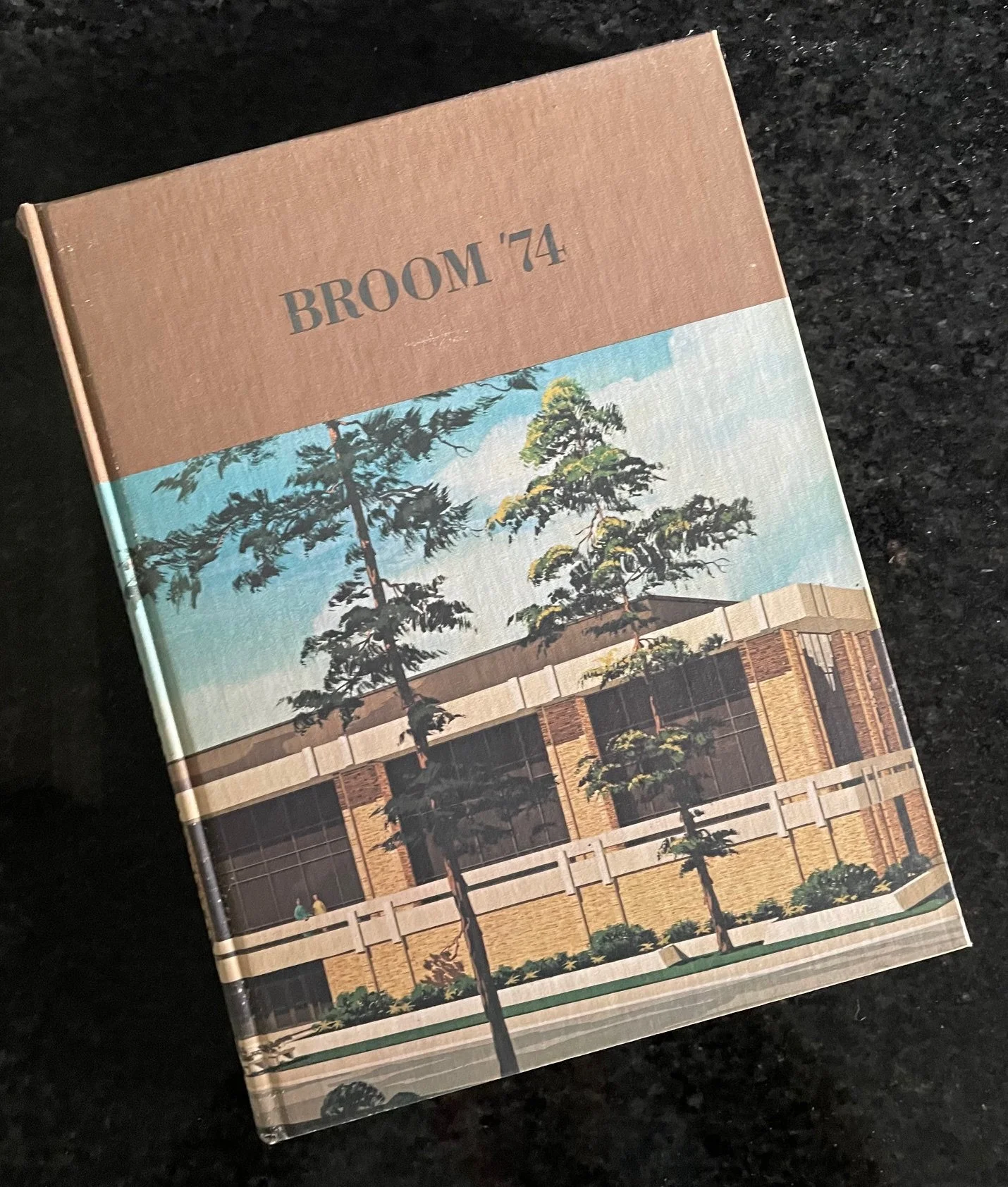
An artist’s rendering of the DSU Student Union was featured on the cover of the 1974 yearbook. The building was completed in the spring a year later.
I was a senior in December of ’74 as we were nearing completion on the student union. I still recall how cold it was the morning Dock asked me to go with him over to the football stadium. He told me that’s where our new job site would be—smack dab in the middle of a parking lot—and he wanted me to help him stake off the perimeter for the new fieldhouse.
I tried to ignore the biting wind as I attempted to hold the prism pole steady while Dock looked through the surveyor’s scope. He patiently instructed me numerous times to move the pole left or right or up and back, as we determined where each of the four corners would be. It seemed to get colder as I held the end of the 200-foot-long measuring tape while Dock checked and rechecked for squareness. My gloves didn’t help much as I used a pickaxe to bust through the asphalt and a sledge hammer to drive the stakes for the string lines that would ensure a level building. Despite the cold, I didn’t mind the assignment, as I liked being singled out for such an important task.
Dock’s mood was lighter, too, that day. I had sensed for several days that something wasn’t right with him. I had no idea what, but he had seemed to be constantly rushed. In hindsight, I think maybe both jobs were behind schedule. He was probably getting pressure from the company heads. He seemed relieved to finally get this new job started.
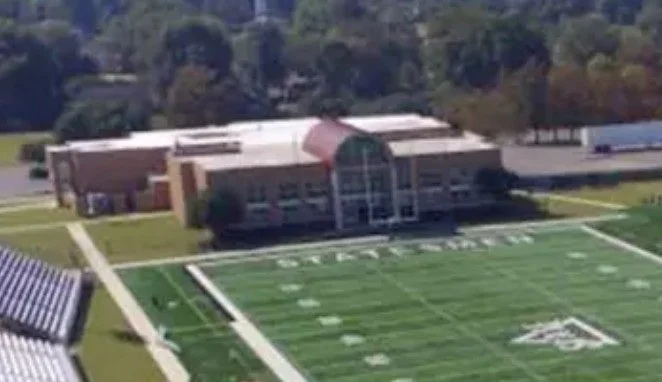
The Delta State Athletic Fieldhouse as it appears today, expanded greatly and modernized. The original structure I helped erect sits behind the more recently added wing in the forefront of this view.
(photo from the university’s website)
Once the student union was wrapped up, we shifted our full attention to the fieldhouse. The asphalt was broken up and hauled away, and before long we were digging footings and setting the concrete forms. Things moved quickly after that. Fill dirt was hauled in and tamped down, concrete was poured, the block exterior walls went up, and the outline of the building began to take shape, right there in what had been a parking lot just weeks before.
Like most construction jobs, there were numerous subcontractors. One crew would come in behind another, each doing their part and then moving on—masons slinging brick and mortar, electricians pulling wire, HVAC workers hanging air ducts, roofers installing the membrane roof covering, drywallers hanging and mudding sheetrock. And at the completion of each phase, a building inspector had to sign off on the work, ensuring that everything was done to code.
It astonished me to realize all the myriad details, large and small, that go into a major construction project. And for this building I was there to witness it all from the beginning, when Dock and I laid out those string lines to the laying of the floor tile and carpet.
As the work progressed and most of the work moved inside, Dock assigned me to our carpenter, Joe. That suited me nicely and was right up my alley, as my grandfather had been a carpenter, and I’d spent a lot of time helping him in my youth. Being a carpenter’s helper wasn’t especially physical. I liked framing the interior walls and building cabinets. And working indoors, my clothes were cleaner when I went home at the end of the day.
Throughout the middle phases of this job, Dock seemed more and more agitated. Looming deadlines, I supposed. Earlier, when he would be overseeing all the work, he was now spending more time in the office trailer on the phone, checking invoices, and studying the blueprints. Important stuff, yes, but there were times when a question would come up and we needed him outside. For big questions, Joe would send me to the office to ask Dock to come out for a looksee. Other times, Joe would voice his concern to me and then say something like, “Since we’re on a tight schedule, why don’t we do it this way and not bother Dock.” I had no way to argue with that; it all looked reasonable to me.
In the spring, a few weeks before I was to quit the job and start my graduate school work in the summer term, we were working on the roof of the Fieldhouse. We were about to start pouring bags of granular insulation into the exterior wall cavities between the concrete block walls and the brick veneer when the company’s big boss drove up. Dock met him at his car. From my vantage point on the roof, I could see that they were having a heated conversation. I couldn’t tell what it was about; I only heard a word or two and it didn’t sound good.
Dock came up onto the roof a few minutes later. I wanted to ask him what the big conversation was about, but I didn’t have to. He told me and the others on our crew that we had on hand roughly 1/3 of the insulation that we would need to complete the job. He explained that we were supposed to have gotten another load of insulation two weeks ago, and that it hadn’t come because someone in the Jackson office goofed up and failed to order it. And to make things worse, the building inspector was coming out that afternoon and would be at the job site in an hour or so. Dock then gave us our marching orders. We were to stuff empty insulation bags and sheets of plastic into the wall cavity—about 3 feet down from the top—and pour in the insulation to the top of the wall above it. This was to fool the building inspector by making it appear that we had insulated the entire wall. So that’s what the heated discussion was about. I could tell it wasn’t Dock’s idea and that he didn’t want to do it.
Dock sensed that I didn’t want any part of it. Thinking back, I may have grumbled a bit and said something out loud. He took me aside and explained that he was in a tough position, that the boss had informed him that the company wouldn’t get paid for the draw that was due if we didn’t pass this inspection. He went on to say that none of us would get paid unless we pulled off this bit of trickery. He said to me privately, “Russell, I know you don’t want to do this. It’s unethical, but we’re caught in a bind. I have to get paid just like everybody else, and I need all hands working quickly.”
I decided in that moment to participate in this ruse. Dock was a good man, a man I respected. He had asked me personally to do it for him and the others. At the time, I considered that to be the right thing to do.
For years my participation weighed on my conscience. It was wrong. I knew that. But I also knew what it would have meant to walk away. Did I do the right thing? I’ve had a long time to think about that day, and I’m still not entirely sure. I haven’t lost any sleep over it for decades, but occasionally I still wonder.
That was 51 years ago, and I’m happy to say that I have never witnessed another act of institutional cheating. I’ve been fortunate to have been in work environments where my employers and coworkers would not have condoned anything like this. That has been a blessing.
That fieldhouse still stands at the south end of the football field. Oh, it’s been renovated and enlarged, but I suspect the original part has always been hard to properly heat and cool. And, given that I was, by several years, the youngest person on the roof that day, I’m pretty sure I’m the only one left who knows why.
Words to Ponder
cheat (n.): from the mid-15c. a shortening of Old French escheat; a legal term for the reversion of property to the state when the owner dies without heirs. The word quickly evolved into a verb meaning to “deprive unfairly or to “deceive or impose upon by fraud or trickery.”
etymonline.com
fieldhouse (n.): an Americanism dating back to 1890–95; a building housing the dressing facilities, storage spaces, etc., used in connection with an athletic field; a building used for indoor athletic events, as track events or basketball.
dictionary.com
Song of the Day
“I Ain’t Afraid of Work” by The Waymores (The Waymores, 2012)
This song was co-written by my singer-songwriter friend, Tom Kimmel. While he’s principally known as a solo artist, he sometimes performs with the Waymores, one of two trios he’s formed. In this catchy song, Tom takes the lead vocal on the third chorus. I think you’ll like his raspy-voiced, energetic delivery.